Article • 14 min read
What is customer service?
Customer service is the support you offer customers throughout a business relationship. Learn why it’s important and assess your own customer service aptitude.


Mozhdeh Rastegar-Panah
Senior Director, Product Marketing
Last updated January 12, 2026

Good customer service definitionCustomer service is the support you offer your customers, from the moment they first contact your business to the months and years afterwards. Providing good customer service means being a reliable partner to your customers, going beyond helping them troubleshoot, use, and make informed decisions about your product. |
The customer journey is different for everyone. Some buyers may schnell make their purchase and move on, while others may return with a complaint or question. Either way, the objective of customer service is to make the most of every interaction and develop long-term relationships with your customers.
There are many types of customer service, and keeping the quality consistent can mean the difference between a buyer returning repeatedly or leaving for good. In this guide, we detail the importance of customer service in providing an excellent customer experience (CX), key traits your support team should possess, and more.
More in this guide:
- Why is customer service important?
- What is human customer service?
- 11 ways to deliver great customer service
- Frequently asked questions
- Boost your customer service with Zendesk
Why is customer service important?
Customer service is important because an adept support structure can boost customer retention, help attract new business, increase sales among your existing customer base, and improve your CX.
The difference between average and good customer service can be razor-thin, but it’s a distinction businesses must realise and achieve. Customers who experience bad customer service or don’t feel taken care of by your organisation can easily look for greener pastures, while those who feel attended to will likely stick around long term.
What is good customer service?
Good customer service means meeting customer expectations time after time. It’s quick, empathetic, helpful, and tailored to understand the needs of the business’s unique customer base.
Truly successful customer service transforms ordinary transactions into meaningful interactions that build trust and loyalty. It goes beyond resolving issues to anticipating customer needs and creating positive experiences that exceed expectations.
The best customer service feels effortless to the clients while being backed by AI-powered tools, well-trained teams, and clear processes. When done right, it becomes a competitive advantage that turns satisfied customers into brand advocates who drive organic growth through referrals and repeat business.
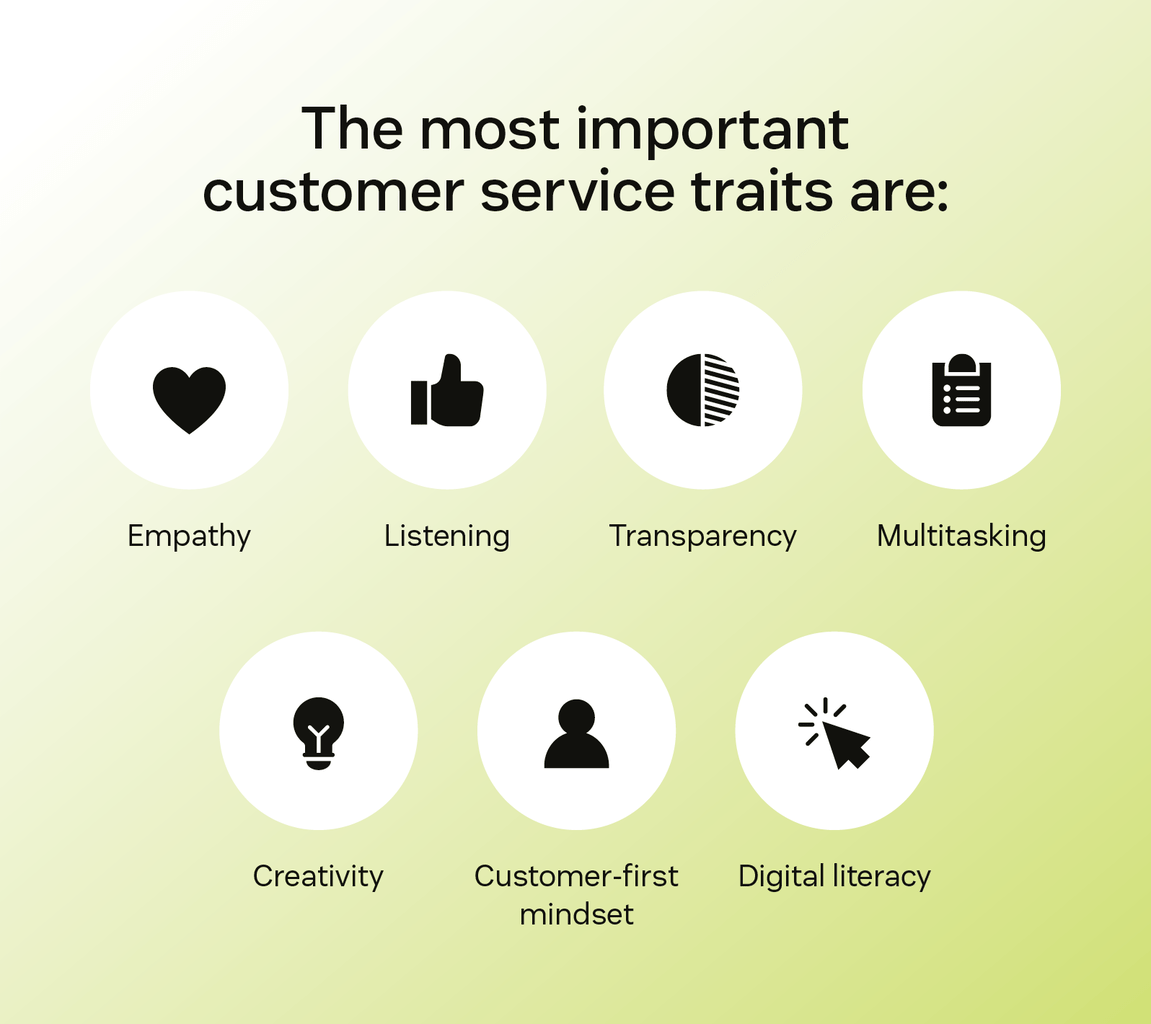
The most important customer service skills, including empathy, listening, and a customer-first mindset.
Whether you are building a support team from scratch or already have your team up and running, we’ve identified a few key tips to help you provide better customer service.
1. Prioritise agent training
A well-trained support team can handle customer interactions more effectively. Therefore, it’s important to prioritise periodic customer service training programmes, so your agents always operate to the best of their ability.
Some important customer service skills and traits to focus on include:
- Empathy: If a customer is upset, being defensive in return can fuel the fire. Instead, train the agent to let the customer know they understand and will do whatever they can to help.
- Listening: Active listening can help agents better understand the customer’s feelings, wants, and needs. Practice active listening by paying close attention to what the customer is saying and taking note of their tone and body language (if on a video call or in person). Wait until they finish speaking to come up with a response.
- Transparency: When customers reach out for support, the last thing they want is to wait on hold for an hour. If your customer service team is busy, make sure customers know how long they can expect to wait.
- Multitasking: Live chat support agents are expected to handle more than one conversation at a time, listening to each customer while finding an answer. Great multitaskers feel comfortable interacting with multiple people at once and don’t lose sight of the bigger picture, even when bombarded with questions.
- Creativity: Unexpected customer needs and questions are inevitable. Customer service agents must learn to assess their customers’ needs and devise tailored solutions using creative problem-solving.
- Customer-first mindset: Customers aren’t necessarily right or wrong, but their perception of events shapes their experience. A customer-first mindset helps agents prioritise the customer experience and tailor their service to meet each customer’s needs, even in cases when they don’t agree.
- Digital literacy: Consumers demand natural, conversational experiences no matter which channel they’re using. 70% of customers expect anyone they interact with to have the full context of their situation. Agents should be well-versed in the technologies and solutions used in customer support to ensure a positive CX.
Role-playing exercises are great opportunities to fine-tune these skills in a controlled environment before putting agents in potentially high-stakes situations.
2. Use AI to improve efficiency and ROI
The use of AI and automation in customer service is schnell becoming standard. As a result, companies are increasingly shifting focus to bring this technology to every customer interaction. From automating tedious tasks to deploying an AI copilot to assist agents, AI is integral to any company’s ability to create an immersive CX.

Companies that invest in AI see a huge impact on their overall operational return on investment (ROI). In fact, according to the Zendesk Customer Experience Trends Report 2026, 90 per cent of CX Trendsetters report positive ROI on AI tools for agents. When nine out of 10 leaders see measurable returns, it demonstrates that AI isn't just a nice-to-have technology, but a strategic necessity for staying competitive in today's customer experience landscape.
3. Personalise the experience
Consumers expect personalised experiences, and you can deliver them through targeted promotions, product recommendations based on purchase history, tailored support interactions, and more.
An impressive 61 percent of consumers crave personalisation, saying they expect more personalised service thanks to AI tools in our CX Trends Report. Thankfully, AI makes personalisation effortless by autonomously collecting and analysing data for actionable insights that help agents deliver more human-first service.
4. Evaluate existing customer service channels
Consumers demand more omnichannel experiences — a CX strategy that creates connected and consistent interactions across channels. So, take stock of your current service channels and ensure you’re offering support on the mediums your customers are most active on.
A few of the most popular customer service channels include:
Phone
Mobile messaging
Social media
Email
- Live chat
Self-service
No matter which channels you use, it is important to deliver comprehensive support and a seamless communication journey for your customers.
5. Focus on business impact
Excellent customer service isn’t just about live interactions—it influences every aspect of your business. Align your customer service strategy with overall business goals to identify trends and opportunities for improvement.
For example, our CX Trends Report found that customers using an AI-driven customer service tool like Zendesk are 1.7x more likely to believe they have the correct tools in place to use AI at scale and 1.6x more likely to report very positive ROI from those tools for customer service. These numbers increase business impact by lowering relative, overall costs and improving customer satisfaction and loyalty.
6. Ensure your systems can integrate
It’s critical to break down information silos between your teams. Integrate your customer service tools, such as customer relationship management (CRM) software, to ensure seamless functionality with other systems. This unified workflow grants agents immediate access to vital customer information, enabling swift and effective service.
7. Set measurable goals
A well-structured approach to measuring customer service performance begins with establishing customer service key performance indicators (KPIs) that align with both customer service objectives and customer satisfaction. Essential metrics should include qualitative indicators, such as sentiment analysis from customer feedback, alongside quantitative measures like:
AVERAGE RESPONSE TIME
- First-contact resolution (FCR)
Ticket Volume
- Customer satisfaction scores (CSAT)
Set specific, time-bound targets for each metric. For example, you can aim to improve first-contact resolution from 75 percent to 85 percent within six months or reduce average response time by 20 percent within a quarter. Regularly review these metrics in weekly or monthly meetings to spot trends and identify areas needing improvement.
Frequently asked questions
Exceed your customer service goals with Zendesk
Good customer service is an attractor in the marketplace. Organisations with good customer service will win new business organically, while weak service pushes people towards competitors.
That said, you don’t need to work on your CX alone. Zendesk provides a complete solution, including a unified Agent Workspace, messaging, and reporting and analytics, to help you deliver an outstanding CX every time.