Article
Call centre analytics: Key types, KPIs, and how to use them
From real-time metrics to customer sentiment, learn how call centre analytics turn support data into better decisions and a stronger customer experience.
Last updated September 19, 2025


What are call centre analytics?Call centre analytics involve monitoring and analysing customer interactions within a call centre to identify patterns and track performance. Teams use this data to coach agents more effectively, streamline operations, and deliver better customer experiences. |
In a typical day, call centres manage hundreds of moving parts: incoming calls, support tickets, and customer feedback, all unfolding in real time. Without a clear way to track what’s working and what’s not, small inefficiencies pile up fast, and the customer experience (CX) suffers.
Call centre analytics help teams track performance and keep operations running smoothly. This guide will explore how using this data can transform your call centre’s efficiency and customer satisfaction.
More in this guide:
- The benefits of call centre analytics
- Key types of call centre analytics
- How to use call centre analytics to improve performance
- Top call centre analytics software
- What to look for in call centre analytics software
- Frequently asked questions
- Enhance customer insights and agent performance with Zendesk
The benefits of call centre analytics
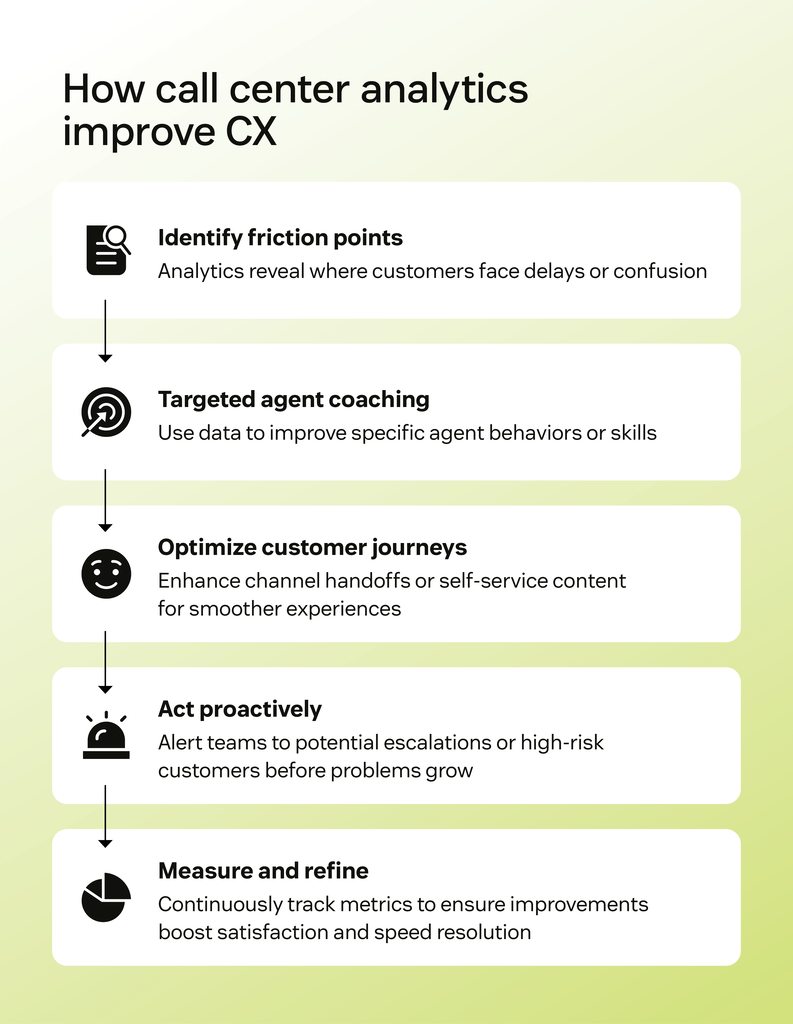
Customer service teams need analytics to measure performance and drive growth like any other business. Successful call centres use analytics to uncover opportunities and optimise processes, helping teams scale operations efficiently.
Here are some specific benefits of using call centre analytics:
- Enabling better agent coaching: Analytics provide a clear view of individual and team performance, helping managers spot coaching opportunities and tailor training to agent needs.
- Improving customer satisfaction: By identifying friction points and tracking key metrics, teams can fine-tune their approach to deliver more satisfying support via contact centres.
- Reducing operational costs: Data on call volume, handling time, and staffing efficiency helps teams cut unnecessary expenses and operate more efficiently.
Ultimately, call centre analytics empower teams to deliver exceptional service that strengthens customer and employee satisfaction.
Key types of call centre analytics
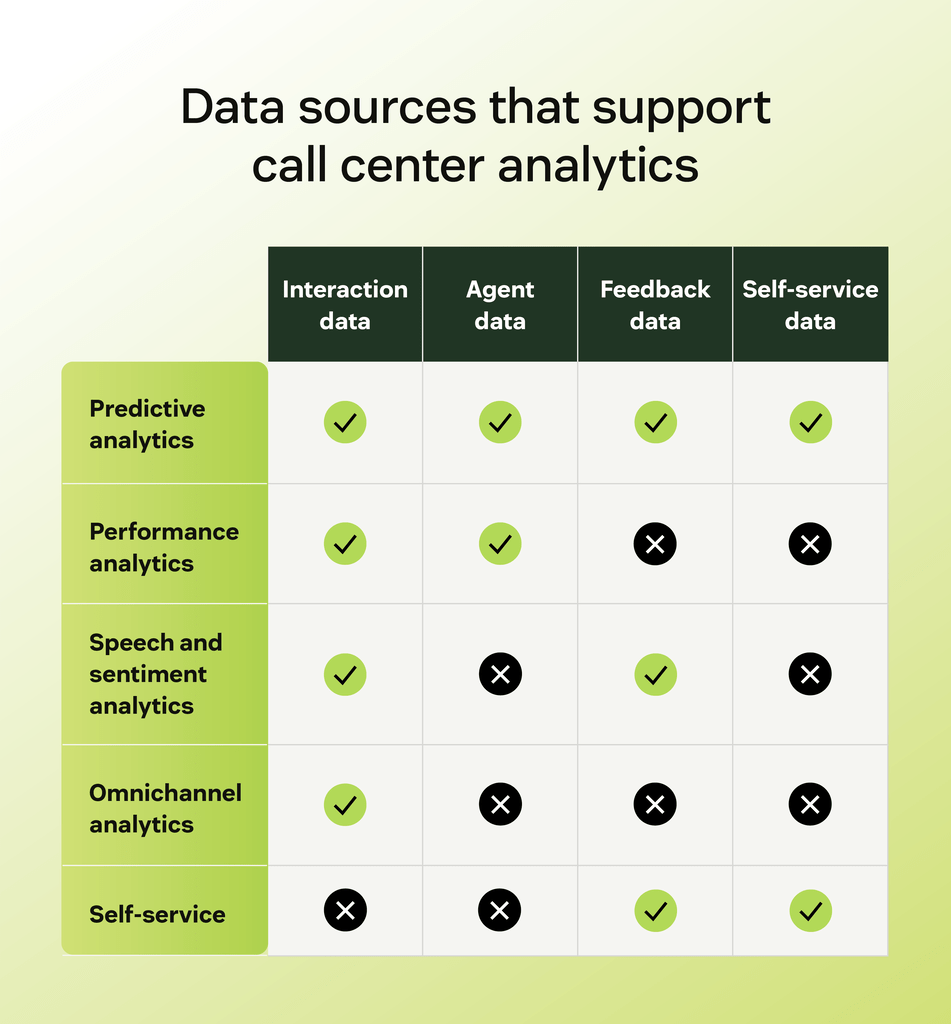
Technology advances are changing how customers interact with companies, expanding the range and depth of call centre analytics. Here’s a look at some of the most important types of analytics today.
Performance analytics
Performance analytics focus on evaluating how effectively your call centre operates in areas like agent productivity and service efficiency. These analytics pull from a range of data sources, such as call recordings and call routing data.
Analysing this data aims to understand what’s affecting performance and, more importantly, why it’s happening. Analysing routing patterns, for example, can reveal whether calls are being assigned efficiently and help teams fine-tune intelligent call routing strategies over time.
Speech and sentiment analysis
Speech and sentiment analysis uses AI to automatically transcribe and interpret call recordings. These tools analyse various components to help teams understand customer emotions and intentions, including:
Keywords and phrases
Tone and pitch
Speech pace and pauses
Emotional cues
For example, AI might flag conversations where it detects frustration, enabling managers to identify coaching opportunities and improve the overall customer experience. These insights are usually accessible through call centre software dashboards, making it easy for teams to act on real-time data.
Predictive analytics
Predictive analytics uses historical data and AI-driven models to forecast future call centre trends and customer behaviours. By analysing patterns such as call volume fluctuations or resolution times, these tools help anticipate demand and potential challenges before they arise.
You can do this by:
Forecast spikes in call volume.
Identify customers at risk of churn.
Flag potential escalations before they happen.
Overall, predictive analytics enable call centre teams to take a more proactive approach to meeting customer expectations.
Omnichannel analytics
Today’s customers reach out across a variety of channels, such as phone, email, live chat, and social media, and often switch between them within the same support interaction. Omnichannel contact centres are designed to unify conversations and customer data across every touchpoint, ensuring a seamless experience no matter where the interaction begins.
To support that kind of connected experience, teams can use omnichannel analytics. This method tracks customer journeys across channels to surface patterns and areas for improvement. For example, they can highlight delays or information gaps when a customer switches from chatbot to email to phone, helping teams streamline handoffs and speed up resolution.
Customer self-service analytics
Customer self-service analytics track how customers interact with resources like knowledge bases, FAQs, chatbots, and interactive voice response (IVR) to find answers on their own. They track which resources customers access and where they struggle, helping support teams identify content gaps that often lead to unnecessary calls.
This information helps teams optimise the self-service experience and free up agents to focus on more complex issues. Let’s say a customer abandons a help article midway, indicating that the content isn’t clear or doesn’t fully address their issue. By updating that article, teams can reduce confusion and lower call volume.
How to use call centre analytics to improve performance
Collecting data alone is not enough; teams need a clear process to act on that information. Here’s a straightforward approach support teams can follow to improve performance with call centre analytics:
- Define clear goals: Identify specific objectives, such as reducing average handle time or improving customer satisfaction, to focus analytics efforts on what matters most.
- Collect the data: Use integrated call centre software to gather information from all channels and unify it in a centralised dashboard for easy access.
- Analyse the data: Examine trends and patterns to find root causes behind performance issues, using techniques like segmentation and correlation analysis.
- Take action: Implement targeted improvements such as coaching or process changes and set KPIs to measure progress.
- Monitor outcomes: Track results continuously to refine strategies and respond proactively to new challenges.
Top call centre analytics software
Cloud call centre platforms have become the standard for modern support teams, offering flexibility and built-in analytics to improve performance. But with so many tools available, it’s important to choose a comprehensive solution that integrates easily with your existing systems and workflows.
Some of the top software options include:
- Zendesk: Delivers a complete contact centre solution with robust analytics, native WEM, integrated ticketing, and omnichannel support tools.
- Talkdesk: Offers customisable dashboards and reporting tools, with features suited for larger teams and automated workflows.
- Five9 Focuses on outbound calling and agent monitoring, with tools designed to improve operational efficiency.
- Genesys Cloud Provides tools for tracking customer journeys and managing conversations across multiple channels.
- Level AI: Specialises in post-call analysis and quality monitoring, using AI to assist with coaching and compliance.
What to look for in call centre software
Effective call centre analytics depend on software that delivers accurate, easy-to-use data and clear reporting to drive improvements. Below are key features to look for when choosing the right solution for your team.
1. Real-time visibility
Real-time visibility allows support teams to monitor live call centre activity and instantly respond to issues like long wait times or unexpected surges. Organisations should opt for software that offers live dashboards, agent status tracking, and up-to-the-minute customer interaction data to keep their teams responsive.
With Zendesk, for example, managers can view active conversations, agent workloads, and queue status as they happen. This live oversight empowers teams to make immediate adjustments and resolve issues before they disrupt the customer experience.
2. Omnichannel data integration
Call centres need software that connects data across every channel to get the most value from omnichannel support. When customer history, preferences, and past interactions are visible in one place, agents can resolve issues faster and with more personalisation.
Zendesk brings voice and digital channels together through unified customer profiles. Agents can instantly access full conversation history, eliminating guesswork and allowing them to pick up right where the customer left off. This empowers agents to deliver more consistent and informed support.
3. Rich performance insights
Detailed reporting on metrics like average handle time, first call resolution, and customer satisfaction allows managers to identify top performers and areas needing improvement. For instance, spotting an agent with long handle times can indicate a need for additional training, while recognising high performers helps replicate successful approaches.
Zendesk enhances this process with built-in call centre workforce management tools that combine performance analytics with quality monitoring and workforce planning. This integrated approach enables managers to support agents more effectively and elevate the customer experience.
4. AI-powered analytics
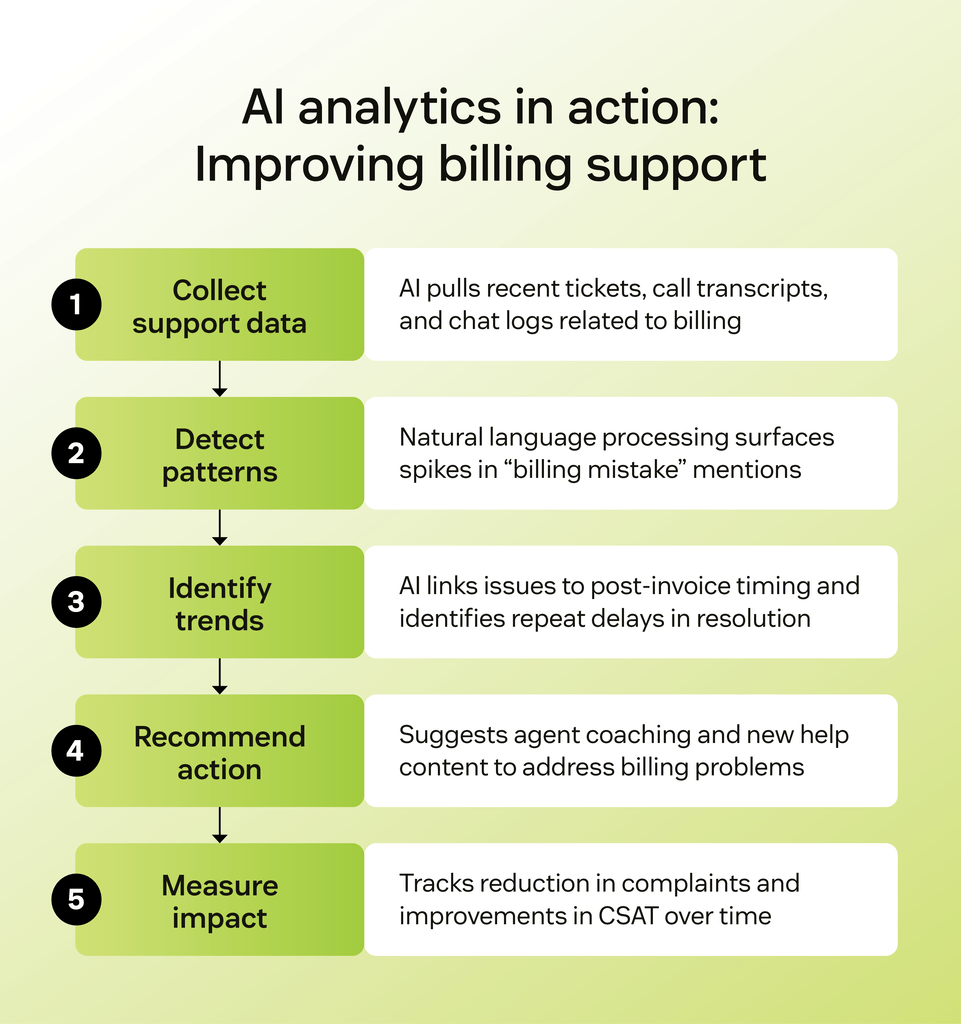
The most effective analytics tools leverage artificial intelligence (AI) to detect patterns and anticipate future trends. For example, AI can forecast increases in call volume based on historical data, helping teams prioritise resources and proactively improve service.
Zendesk uses advanced AI to surface trends within agent and customer data. By combining these forecasts with operational metrics, Zendesk enables managers to make informed strategic decisions that improve efficiency and customer satisfaction.
Frequently asked questions
Enhance customer insights and agent performance with Zendesk
The future of customer service belongs to teams that embrace data-driven strategies, blending human expertise with intelligent analytics to anticipate needs and deliver personalised support. Choosing a software solution that evolves with your business allows you to continuously improve, turning every interaction into a chance to adapt and deepen customer relationships.
Take the next step in evolving your call centre with Zendesk. Discover how Zendesk for contact centre can power your progress with unified analytics, AI-driven guidance, and seamless integrations.