Data over instinct: myenergi’s 50% faster customer support with Zendesk and Premium Plus
myenergi, the renewable energy innovator behind the world’s first solar and wind compatible EV charger, faced a unique support challenge: identifying “who is who” among customers with vastly different technical expertise, then tailoring and accelerating support accordingly. Partnering with Zendesk and Premium Plus, the UK-based company transformed customer support by cutting resolution times in half in just 3 months, enabling their same team of 14 agents to support hundreds of thousands of devices globally.
“Zendesk is flexible, scalable, insight-driven. It underpins how we scale support without scaling headcount at the same rate. It is now part of how we run the business, not just how we answer customers.”
Kieran Maclachan
AI Operations and Customer Experience Leader at myenergi
Founded
2016
Headquarters
Stallingborough, North East Lincolnshire, England
Industry
Renewable Energy
Support team
25 agents
50%
Reduction in resolution time in 3 months
85-90%
AI-powered self-service resolution rate
450%
Help Centre traffic growth
70-80%
One-touch resolution rate (from 10%)
Pioneering the transition to renewable energy
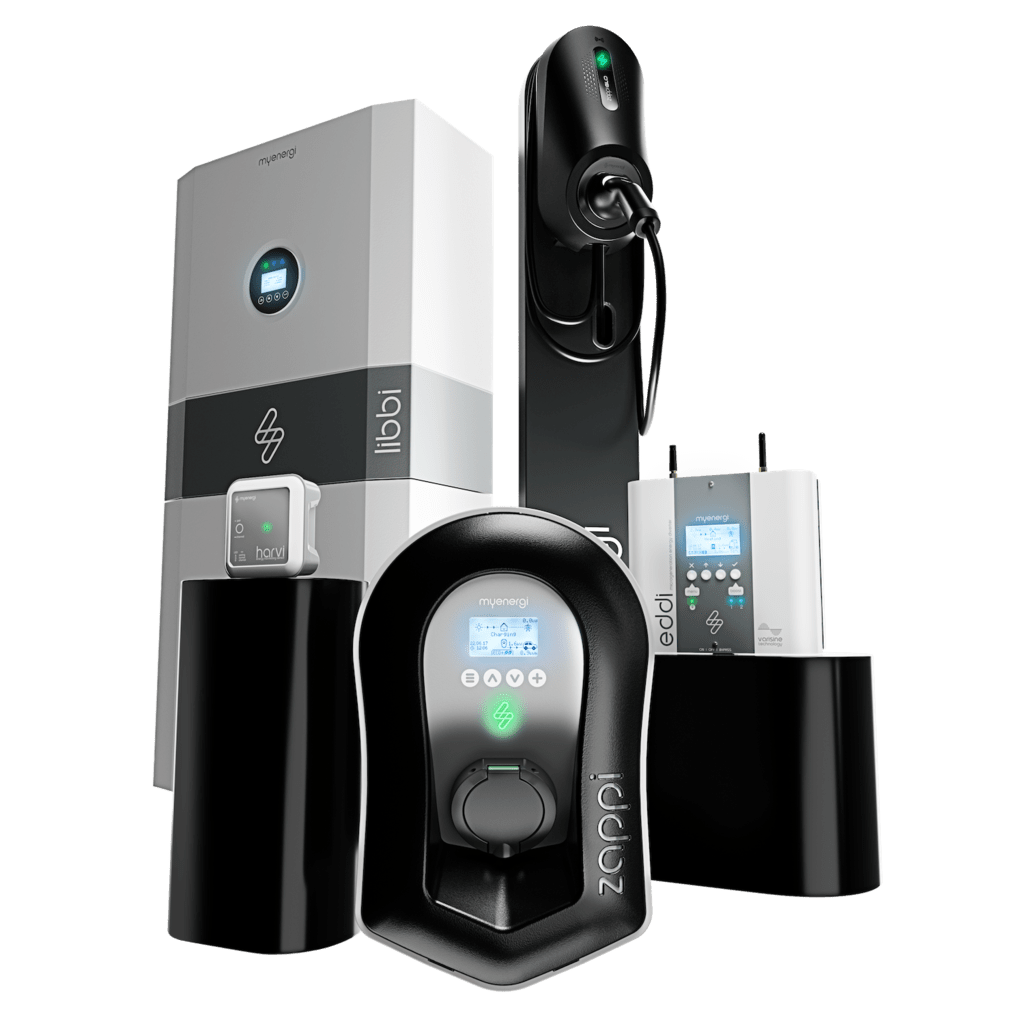
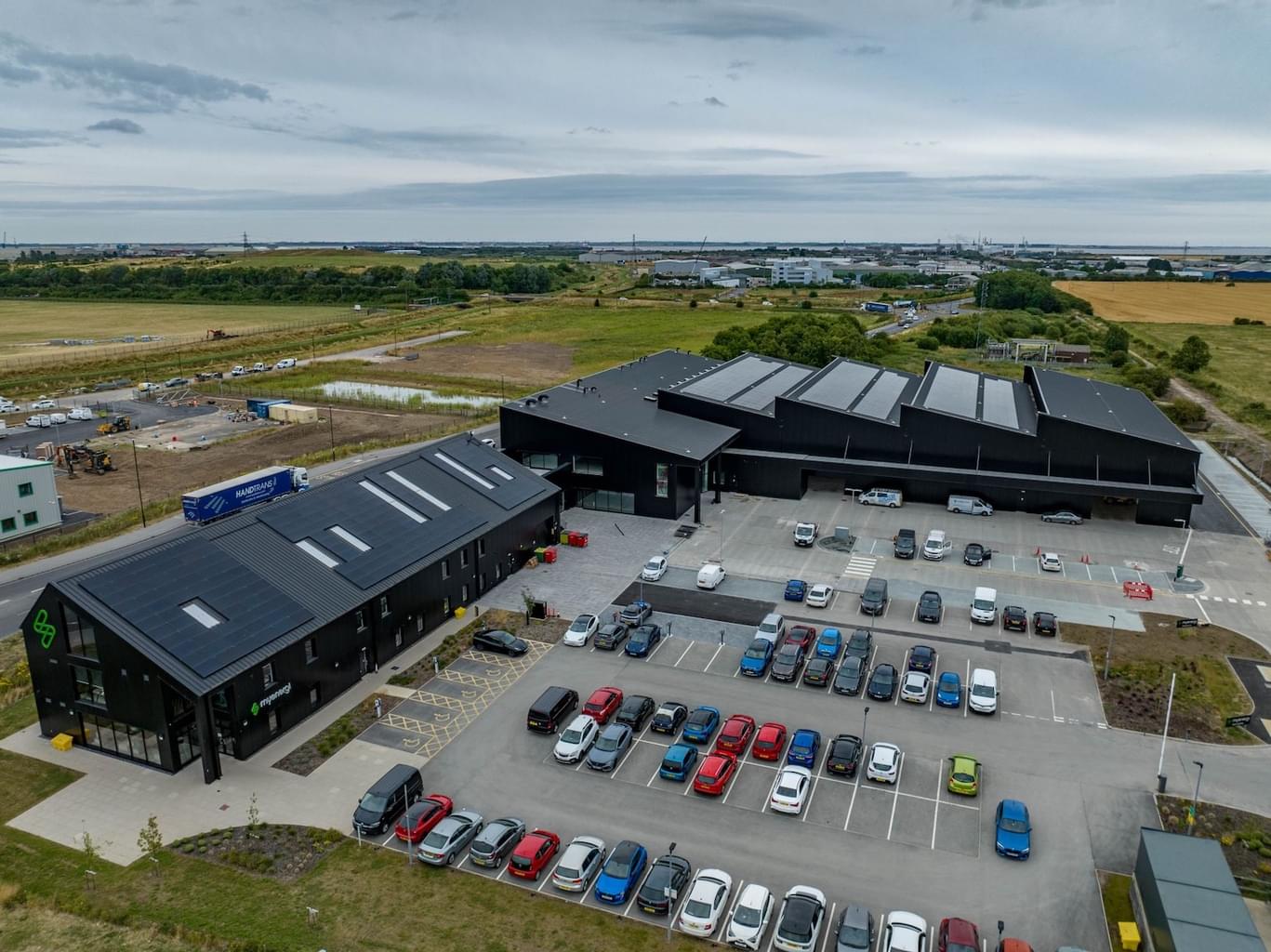
myenergi joined the renewable energy revolution roughly 10 years ago. Since then, the company has developed the world’s first solar and wind compatible electric car charger (the eco-smart zappi EV charger) and a wide range of innovative products that allow customers to harness surplus power from solar panels and wind turbines, transforming ordinary homes into efficient, self-sustaining energy hubs.
Operating from their headquarters in Stallingbrough, Lincolnshire, myenergi supports customers across the globe with teams in the Netherlands, Germany, Northern Ireland, or Australia. Their support operation handles inquiries in English, Dutch, French, German, and increasingly Nordic languages – a reflection of the brand’s fast international growth.
The team manages a mix of channels: an extensive Help Centre, phone support, and live chat. For Kieran Maclachlan, AI Operations and Customer Experience Leader, the mission is clear: design a support operation that matches the sophistication of their products while remaining accessible to every customer, regardless of technical expertise.
“Our products are technical and cutting edge for our field, so it’s not as straightforward as, let’s say, a refund on a damaged clothing item or canceling a hotel booking. This has meant our customers are extremely varied in knowledge of the product, so being able to identify who is who early on is imperative”, Kieran explains.
Hardware is a big part of the business, for sure, but not all of it: myenergi is also focused on enabling a fundamental shift in how people interact with energy, regardless of their knowledge of the product. Getting the wrong level of support to the wrong customer could mean frustrated experts waiting through basic explanations, or overwhelmed beginners receiving technical jargon they can’t understand. That’s why identifying “who is who” early in every interaction became myenergi’s defining challenge – and ultimately, their competitive advantage.
A support operation built on assumptions rather than data
Before Zendesk, myenergi relied on Freshdesk to manage customer support. As the company scaled and their product line became more sophisticated, the limitations of their existing system became increasingly visible. “The input customers could actually give us was really restrictive”, Kieran recalls. “It didn’t give us the ability to do custom fields.”
For a company selling technical products to customers with wildly different expertise levels, this was a dealbreaker. Without the ability to create custom fields, myenergi couldn’t capture the information that mattered most: is this customer an electrician or a homeowner? Do they have solar panels or just an EV? Are they comfortable with electrical terminology or do they need everything explained from first principles?
The result was a support operation built on guesswork rather than data. Agents couldn’t easily identify customer knowledge levels at the start of an interaction, leading to mismatched conversations, longer resolution times, and frustrated customers. “I found that absolutely baffling. No business is the same as every other business”, Kieran says.
Without proper categorisation and routing, myenergi couldn’t analyse patterns across their customer base. The data existed somewhere in the tickets, but there was no systematic way to go through it.
That system also allowed a practice that undermined team fairness and efficiency: agents could “cherry-pick” easy tickets, leaving complex technical issues to sit in the queue while straightforward queries were resolved quickly. The result was uneven workload distribution, inconsistent customer experiences, and growing tension within the team.
As myenergi continued to expand into new markets and launch more sophisticated products, the company needed a platform that could grow with them, adapt to their unique needs, and give them the flexibility to design support around their business.

Building a platform for data-driven support
When myenergi evaluated new platforms, flexibility was the primary requirement. Zendesk’s ability to create custom fields, dynamic content, and fully customisable workflows immediately stood out.
“Having that ability through Zendesk was a massive win for us straight away”, Kieran explains. “It was one of the many boxes that got ticked very quickly when we were looking for a new solution.”
But having powerful tools is only valuable if you know how to use them effectively. This is where Premium Plus, Zendesk’s implementation partner, became instrumental. “From early days dealing with Premium Plus, their ability to decipher my requests as I learnt Zendesk alongside their own training was amazing”, Kieran states. “Once I got the hang of what does what, I knew I had made the right choice bringing Premium Plus deeper into myenergi and how we work.”
Premium Plus supported myenergi’s transformation from what Kieran describes as “an out-of-the-box solution” to “the frankly bespoke version of Zendesk we use today”. The partnership touched every aspect of the platform:
A) Zendesk Support became the central hub, but not in its default configuration. Premium Plus worked with myenergi to build custom fields that captured exactly what agents needed to know. These fields then fed into sophisticated routing logic that ensured every ticket reached the right agent on the first attempt.
B) Zendesk Guide allowed the complete transformation of the previous Help Centre – which, as Kieran diplomatically puts it, “looked like a website from 2009”. Premium Plus redesigned the entire experience to match myenergi’s main website while adding functionality specifically tailored to support needs.
The customer response was immediate and enthusiastic. “Almost from day one, people were tweeting us, sending Instagram and Facebook messages, LinkedIn messages from businesses as well, saying this was such a massive improvement”, Kieran recalls. Customers praised not only the visual redesign but the ability to find information they “never knew was on there” but had been available all along.
The new Help Centre became an entry point where customers could effectively triage themselves. Through carefully designed ticket forms and dynamic content, customers could indicate their technical level, select their specific product and issue type, and provide relevant context before ever reaching an agent. This self-triage system meant that by the time a ticket arrived in an agent’s queue, it contained all the information needed for rapid, accurate resolution.
C) Zendesk Explore then allowed myenergi to build custom dashboards that provided full visibility into customer patterns, team performance and operational efficiency. “The dashboards provide the business and our board guidance on what drives our demand from customers, installers, and our partners. But even more”, Kieran adds, “it provides visibility into what the agents are doing. The dashboards have given us the tools to not just see more about customers but also more about our own team and their performance.”
This visibility became particularly valuable during product launches. When myenergi recently released a new charger (their first screenless, app-based device), Explore allowed them to analyse incoming support contacts within hours of the product hitting the market.
“We understood, for example, that this cohort of customers were having issues with this area in the app. Then we could get that information over to our engineering department with real-world data”, Kieran recalls. The result? Engineering fixes within hours instead of weeks, and product development genuinely guided by support insights.
Ending the cherry-picking culture
One of Premium Plus’s most impactful contributions addressed the fairest distribution of work. The old system had allowed agents to select easy tickets, creating inequality in workload and inconsistent customer experiences. So, Premium Plus implemented routing logic that distributed tickets fairly based on agent skills, current workload, and ticket complexity.
Combined with the customer self-triage system, this ensured that every ticket landed with the right agent at the right time. “What Premium Plus let us achieve was a fair way of distribution of tickets”, Kieran says, “but also empowering the customer when they are reaching out to us to almost triage themselves and allow us to route them to the best person each time.”
The impact was immediate: resolution times dropped by 50% within three months of implementing the new workflows.
Bringing intelligence to every interaction with Copilot
With foundational systems in place, myenergi turned to intelligent automation to further scale their customer experience. The team adopted Zendesk Copilot to streamline how agents handled technical explanations, repeat configuration issues, and structured troubleshooting responses. The goals were specific: “speed, consistency, and reduced cognitive load on agents”. “We wanted them focused on solving problems, not rewriting the same explanations repeatedly”, Kieran explains.
The implementation centred on defining good content and appropriate guardrails. Agents now use Copilot primarily for two functions: summarising long ticket histories and drafting initial responses. For multi-message technical cases, Copilot can condense pages of back-and-forth into a concise summary, removing several minutes of manual review per ticket.
This becomes crucial when escalating issues to engineering teams. “If the ticket gets escalated to our engineering team, they get an idea straight away what the issue is rather than reading back and forth emails”, Kieran notes.
For response drafting, Copilot excels at technical explanations and structured troubleshooting steps. More importantly, the system supports agent decision-making rather than replacing it. “It saves time without removing agent ownership”, Kieran emphasises.
In fact, agent adoption of Copilot followed a predictable arc. Initial resistance centered on one fear: “Is this going to replace me?” Kieran’s response was clear: “Absolutely not. This is here to support you, to make you more efficient, to upskill you”, he said to the team.
For myenergi, the human element in technical support remains non-negotiable. While Copilot drafts responses and summarises contexts, agents review, personalise, and approve everything that reaches customers.
So, the team remains “deliberately cautious” about full automation through auto-assist features, despite Copilot’s capabilities. “Our products are technical and we want full confidence in automation before scaling it further. It’s important to say: we’re not against it, just not there yet”, Kieran states.

The data behind the transformation
The turning point for myenergi came when they stopped treating Zendesk as a ticket tool and started treating it as an operational platform. Once custom fields, views, and routing logic were in place, support data began influencing decisions far beyond the contact centre.
The results speak for themselves:
- Resolution times dropped by 50% in the first three months after restructuring workflows – a huge improvement achieved not through adding headcount, but through intelligent routing and better information capture at the start of every interaction.
- Help Centre traffic grew by 450%, from 400,000 to 2.2 million annual views, due to the redesigned experience and expanded content. Retention rates shot up “astronomically” by “well over” 200%, with customers actually finding and using the information they needed.
- One-touch resolution rates jumped from 10% to somewhere between 70-80%, meaning tickets are now resolved on first contact rather than lengthy back-and-forth exchanges.
- Complex issue resolution dropped from 7 working days to 3 working days through omnichannel routing that ensures tickets reach the right agent immediately.
- AI-powered self-service achieves 85-90% resolution rate, with the vast majority of queries being handled without human intervention.
- CSAT scores hold steady at 3.5-3.8 out of 4 despite increasing complexity and the shift to more self-service, proving the transformation enhanced both efficiency and quality.
Beyond the numbers, the qualitative transformation has been equally profound. Support data now feeds directly into product development decisions, with engineering teams receiving real customer feedback within hours of issues emerging.
“Our biggest achievement with Zendesk has been designing a support operation driven by data rather than instinct. We now route customers correctly the first time, understand why they contact us, and act on trends quickly. Zendesk moved support from reactive to operationally strategic”, Kieran emphasises.
Omnichannel around the globe, QA tools, and more to come
In 2026, myenergi plans to implement true omnichannel support across all their global subsidiaries. The Australian team will provide coverage for UK customers during off-hours, while European teams can support Australian customers during their overnight periods.
This follow-the-sun model will also prove to be beneficial for agents, not just customers. “It’s better for our agents as well, because they can actually deal with other markets and see how other people work”, Kieran notes. Basically, there are no downsides: workload can be balanced globally during incident surges or product launches, and customers receive human support regardless of when they need it.
Quality Assurance (QA) tooling is also a 2026 priority, driven by the need to catch issues faster and support agents more proactively. Historically, form-filling errors or process deviations might not be discovered until months later, but with QA automation, issues like these can be flagged within days.
“What we want to do with QA is be able to flag issues quicker internally, so we can have conversations with the team to understand what’s happening. Is it something external? Is it something internal? How can we support the actual agent better, not just the customer?”, Kieran clarifies.
Deeper system integrations continue to expand Zendesk’s role in myenergi’s operations. The recent integration with Jira has eliminated the need for agents to physically walk to another building to alert engineers about critical issues. Now, tickets flow directly into engineering workflows with full context intact.
Future integration plans include two-way communication with Jira, so engineering updates automatically flow back into Zendesk tickets, keeping agents informed of progress. Additional integrations include review platforms beyond Trustpilot – like Google reviews – to provide even more complete visibility into customer sentiment across all touchpoints.
And as AI continues to evolve, myenergi sees opportunities for deeper automation, but with the same balanced approach that has characterised their Copilot adoption. “More self-service, more automation, fewer avoidable contacts. Human support will focus on complex, high-value issues”, Kieran envisions.