How Genius Sports built faster 24/7 support for live sports data
After migrating from fragmented tools to a unified Zendesk support solution, Genius Sports achieved 94% customer satisfaction, cut resolution times by 35%, and handled 50% more tickets. The defining factor? A custom multi-user group chat feature that allows entire client teams to collaborate and talk in real-time with Genius Sports support.

"With a 24/7 global operation across Betting, Broadcast, and Sports, we needed a platform that worked as fast as our data. This transformation has been a game-changer."
Martin Taska
Director of Support Services at Genius Sports
Founded
2001
Headquarters
London, United Kingdom
Locations
18
Employees globally
2600
94%
Customer satisfaction score on email and web
35%
Improvement in resolution time (to 9 minutes) in 6 months
50%
Increase in tickets handled monthly (to 23.5k) in 1 year
90%
Growth in self-service content in 1 year
Live data, high stakes
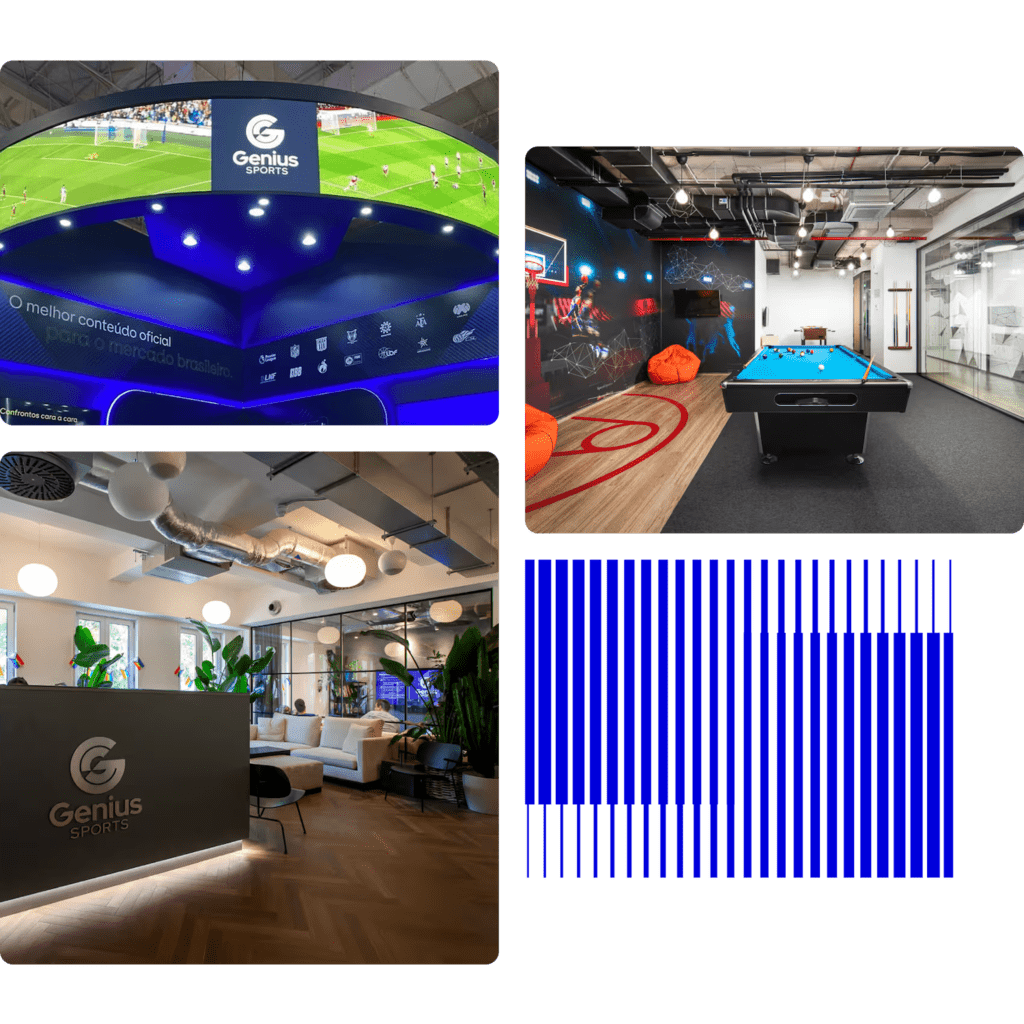
A global team of 2,600 people across five continents. 240,000 sports events covered annually. Major offices in London, New York, Los Angeles, Tallinn, and Medellín. For nearly 25 years, Genius Sports has grown to become one of the world’s leading sports technology companies. They provide official data and technology solutions that power Betting and Broadcast ecosystems, as well as the next generation of Sports through their newly launched GeniusIQ platform.
Genius Sports’ products are present in the most critical moments in sports –it couldn’t be otherwise, given that when matches are live, stakes are high, and failing to meet users’ expectations simply isn’t an option.
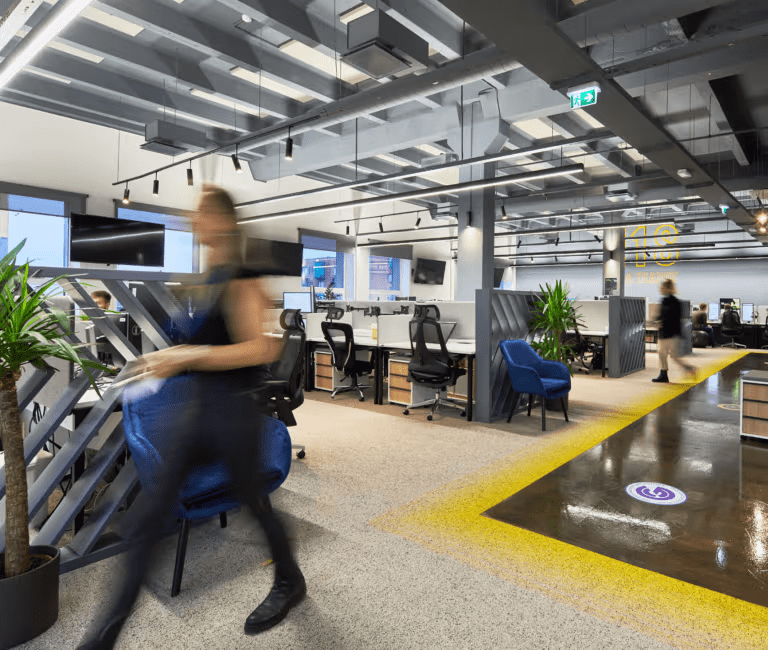
The company’s support team, with roughly 200 people, operates across two main locations: Tallinn, in Estonia, and Medellín, in Colombia. Keeping it all running is a full-time job – Martin Taska, Director of Support Services at Genius Sports Group, oversees this operation. “We run a 24/7 business”, he explains. “Holidays, weekends – there is no break.”
The team runs on a two-level structure: first-line support handles customer queries, while second-line specialists tackle technical issues. Although around 99% of support is delivered in English, the team can also provide support in French, Spanish and other languages for specific clients, a reflection of Genius Sports’ global reach and B2B focus.
Unlike many consumer-centred businesses, Genius Sports operates in a B2B environment where the stakes are different. When a betting operator has an issue during a live match, or a broadcaster needs technical support mid-stream, response times matter.
The support channels reflect this urgency: around 60% of interactions happen via messaging and chat, where details can be shared quickly and issues can be replicated efficiently. Email handles the remaining queries, while phone support accounts for just 1% of contacts. “The overall principle is that phone is faster, but the reality here is different”, Martin notes. “Phone slows us down when we need to replicate issues and gather details.”

When fragmented tools meant scattered data
Before 2025, Genius Sports’ support operation ran across multiple platforms, Jira Service Desk for ticketing, Freshdesk for certain workflows, Skype for chat communications, and RingCentral for phone support. Each tool worked in isolation, which meant data lived in different places, and getting a complete picture of customer interactions required pulling information from multiple sources.
Martin’s been with Genius Sports for close to 17 years. He has seen countless tools come and go, but by 2024, the limitations had become impossible to ignore. Three major challenges stood out. “Number one was having proper data and understanding of why customers contact you. Having that in multiple tools was leading to lost data, harder to track and manage”, Martin explains.
Beyond the need for data consolidation, Genius Sports was already moving toward a more sophisticated, unified communication strategy to better serve their global partners. While Microsoft’s announcement regarding the retirement of Skype provided a definitive timeline, Genius Sports was already well-prepared with a modernization project in-flight.
The third driver was security and the need for a unified platform. “We wanted to have a single tool where customers would be able to use whatever platforms they use, and we would be able to work from one single tool as well”, Martin says. “So, having an ability to do integrations with common tools was really appealing for us.”

Finding a partner, not just a platform
Genius Sports didn’t rush into the decision. Their internal project management team ran a rigorous process examining requirements, concerns, and challenges, and evaluated multiple providers before eventually settling on Zendesk.
“The key requirement from our end was to have a group chat functionality, which most providers didn’t have”, Martin explains. “Zendesk was willing to work with us and build this custom solution.”
The multi-conversation support feature was, in fact, a competitive differentiator. It allowed multiple users from a client organisation to participate in real-time conversations with Genius Sports support, significantly reducing escalation times and creating faster resolutions.
The challenge? This feature simply didn’t exist in most platforms. Zendesk’s willingness to build it custom became the foundation of a true partnership, not just a vendor relationship.

The custom solution that made the difference
The multi-conversation support functionality required extensive collaboration to get right. “It was a very challenging period, to be honest”, Martin admits. “It required a lot of effort from many people on our side, and I can imagine the same thing from Zendesk’s side.”
The team had to navigate specific requirements, including expanding the group chat size from around 30 participants to 50 to accommodate Genius Sports’ largest clients. “What allowed us to succeed was the relationship and close communication with each other”, Martin explains. “We effectively had to come up with a compromise to a certain degree, but I think we ended up with a solution that is a good fit for all.”
The migration happened without downtime or business disruption, which was a remarkable achievement given the complexity, the high-stakes, and the 24/7 nature of Genius Sports’ operations.
Throughout the implementation and beyond, Peter Eshkeri, Genius Sports’ Senior Principal Customer Success Manager, became an integral part of the team. Not just for the technical migration, but for strategic thinking. “The relationship with Peter has been fantastic”, Martin says. “He's provided strategic insights, connected us with other Zendesk customers facing similar challenges, and served as our bridge to the product team.”
Building the complete platform
With the custom chat functionality as the centrepiece, Genius Sports built out the rest of their support ecosystem. The core implementation included Zendesk’s messaging, email, and phone capabilities (through Zendesk Voice), along with knowledge management that would prove transformative.
In fact, from the beginning, Genius Sports established a dedicated knowledge management team. Though small, this team has driven impressive growth: a 90% increase in knowledge materials since launch, building a repository that serves both internal teams and external customers.
To complete the unified platform vision, Genius Sports integrated Zendesk with their existing technology stack. The Slack integration allows customers to use their preferred internal communication tool while Genius Sports manages everything through Zendesk.
The Salesforce integration provides critical context, letting support agents see which products customers are using and who their commercial representative is, without having to switch tools.
Zendesk also allowed Genius Sports to consolidate their tool stack. RingCentral, previously used for phone support, was replaced entirely by Zendesk Voice. Fewer tools meant fewer integration points, less training, and a more efficient operation.
The numbers that tell the story
The impact of using Zendesk’s solutions has been clear: Genius Sports achieved a 94% customer satisfaction score (specifically on email and web support) and improved by 35% the average full resolution time, to 9 minutes – metrics that Martin describes as “not easy to achieve” in a demanding B2B environment.
And there’s more:
- The average first reply time dropped to just 1 minute for messaging and 2 minutes for email.
- The team now handles 23,500 tickets monthly (a 50% increase in one year) without adding headcount.
- Self-service usage increased by 90% in the first year as the knowledge base grew.
- The platform itself maintained 100% uptime over 12 months, which has been crucial for a 24/7 operation.
But beyond these headline figures, the real transformation lies in what these numbers represent: visibility, predictability, and control. “From my perspective, it’s all about the ability to track, report and provide business value”, Martin says. “We created benefits for customers and for the business thanks to Zendesk.”
The reporting capabilities, in particular, have been transformative. Where data was once scattered across multiple platforms, Genius Sports can now focus on specific customers experiencing challenges, pick up trends across the entire support operation, understand peak times, and make data-driven decisions about staffing and processes. “Now, having everything in one single tool allows us to make better decisions. Before, we just had an idea of what was happening. I don’t think our idea was wrong, but now it’s scientific data”, Martin notes.
Customers noticed the difference
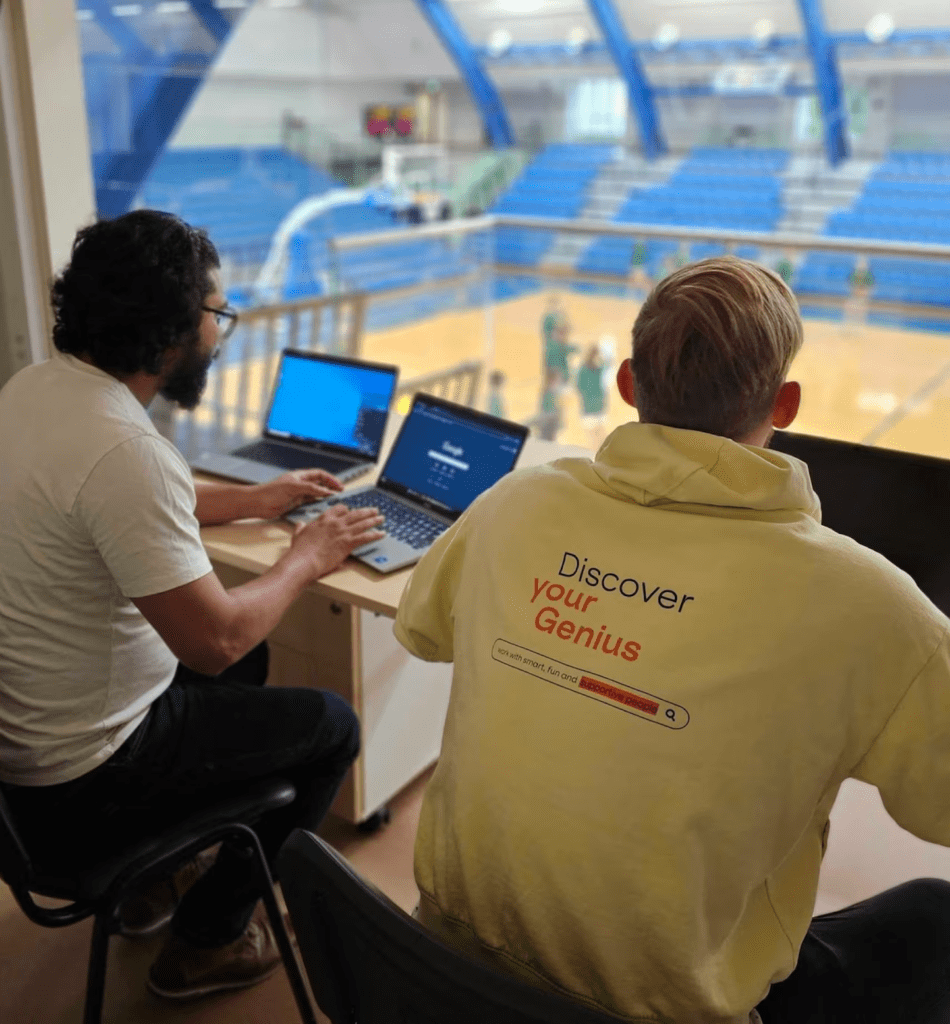
Perhaps the most telling measure of success came from customers themselves. In early 2025, during the transition period, several customers raised concerns about the change from Skype to Zendesk. By mid-year, the narrative had shifted completely. In conversations with a few customers, the feedback was overwhelmingly positive.
“A client specifically said to me: ‘This is the best thing you have ever done.”

Omnichannel, AI and more coming next
Genius Sports isn’t done yet. The Slack integration went live recently, but remains in beta with a handful of customers, a cautious, phased approach that reflects lessons learned about change management. But Martin expects the rollout to accelerate in early 2026.
Omnichannel capabilities are being finalised, promising even greater routing efficiency and workload management. AI is also on the horizon, with discussions ongoing about where it can add the most value, intelligent triage, agent assistance, or automated responses for common queries. Quality Assurance (QA) tools are also under consideration.
“Lots of innovation from Zendesk’s side is coming along, trying to further close the loop end-to-end from the customer perspective”, Martin says. “I’m confident there will be additional elements which could benefit us as well as we continue in this journey.”
It seems like a partnership built to last. “I expect it to grow and continue on a longer-term basis”, Martin shares. “From our perspective, we’re happy where we are.”