How Chiltern Railways worked with Zendesk Premier Partner Appamondo to help agents use Copilot and QA to enhance passengers’ experience
Chiltern Railways and Zendesk Premier Partner Appamondo have worked together for almost a decade to improve its passenger’ experience whilst travelling on the network. The initial launch of a unified customer service platform on Zendesk capable of complying with Office of Road & Rail (ORR) requirements in 2017 has been continually improved with, most recently, the launch of Copilot and QA. Today, the railway operator serves 22.9 million annual passengers and is able to support passengers on multiple channels including phone, email, social and messaging. Since implementing Copilot and QA, Chiltern has achieved a 66% reduction in full resolution time and 40-times greater efficiency in QA processes, transforming both passenger experience and agent productivity.
“Copilot and QA have enabled us to unlock far greater benefits from Zendesk in terms of agent productivity and, ultimately, passenger experience.”
Marc Costello
Contact Centre Manager at Chiltern Railways
Founded
1996
Headquarters
United Kingdom
Route operated
349km (Numbers provided by the Train Operating Company Key Statistics 2024/25)
Annual passengers
22.9 million (between April 2024 and March 2025)
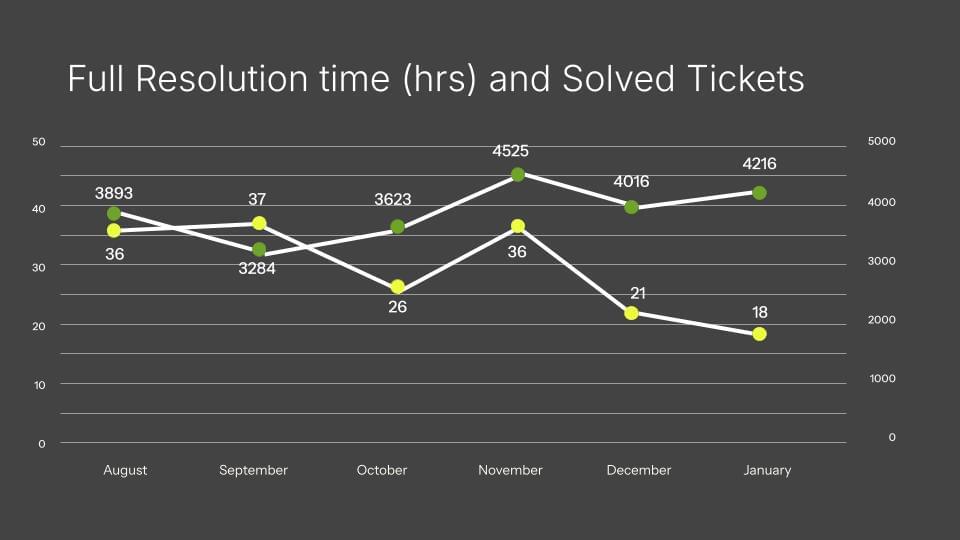
-66%
Full resolution time (since QA rollout)
40x
More efficient (automatic vs. manual QA processes)
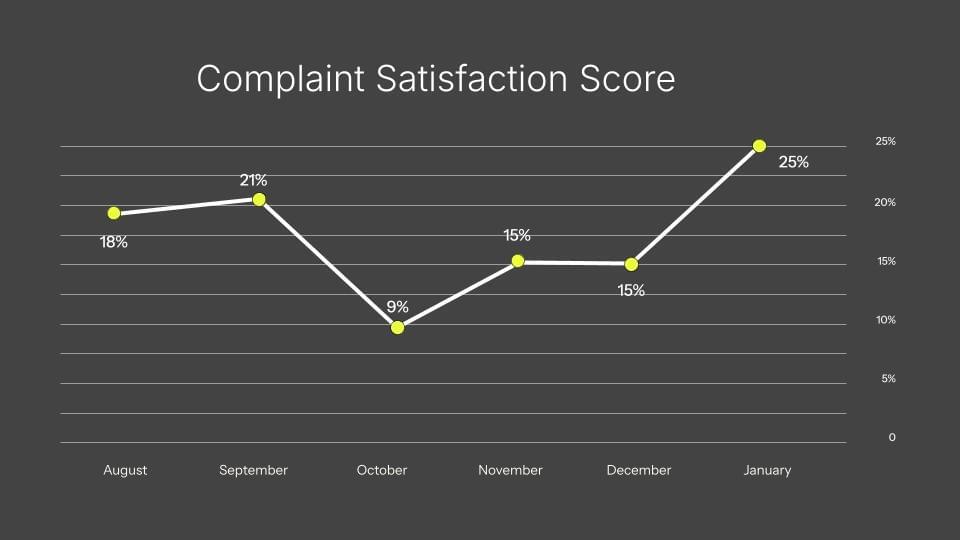
+21%
Complaint CSAT (since Copilot & QA rollout)
1 min
Average first reply time for messaging
Connecting people, one journey at a time
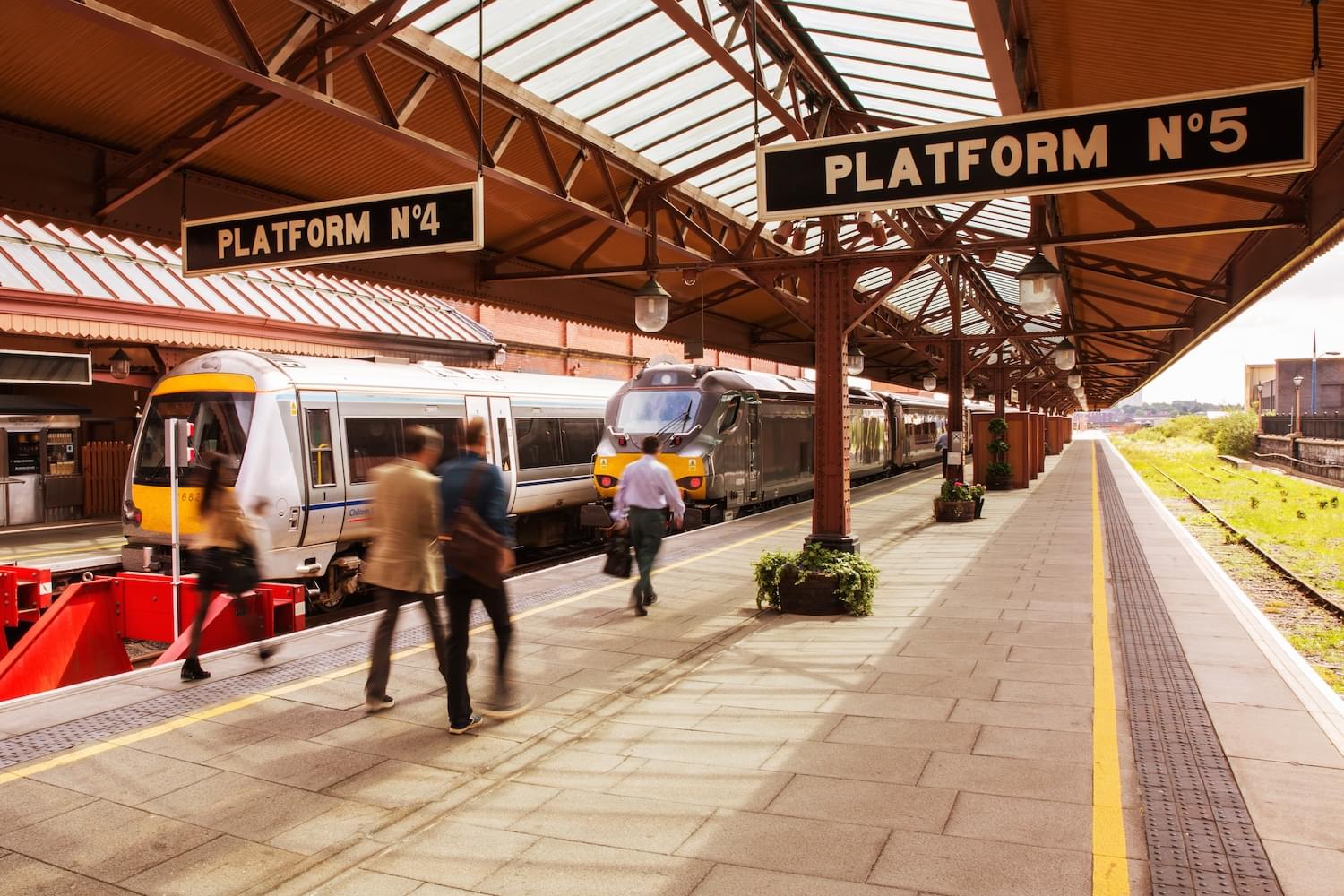
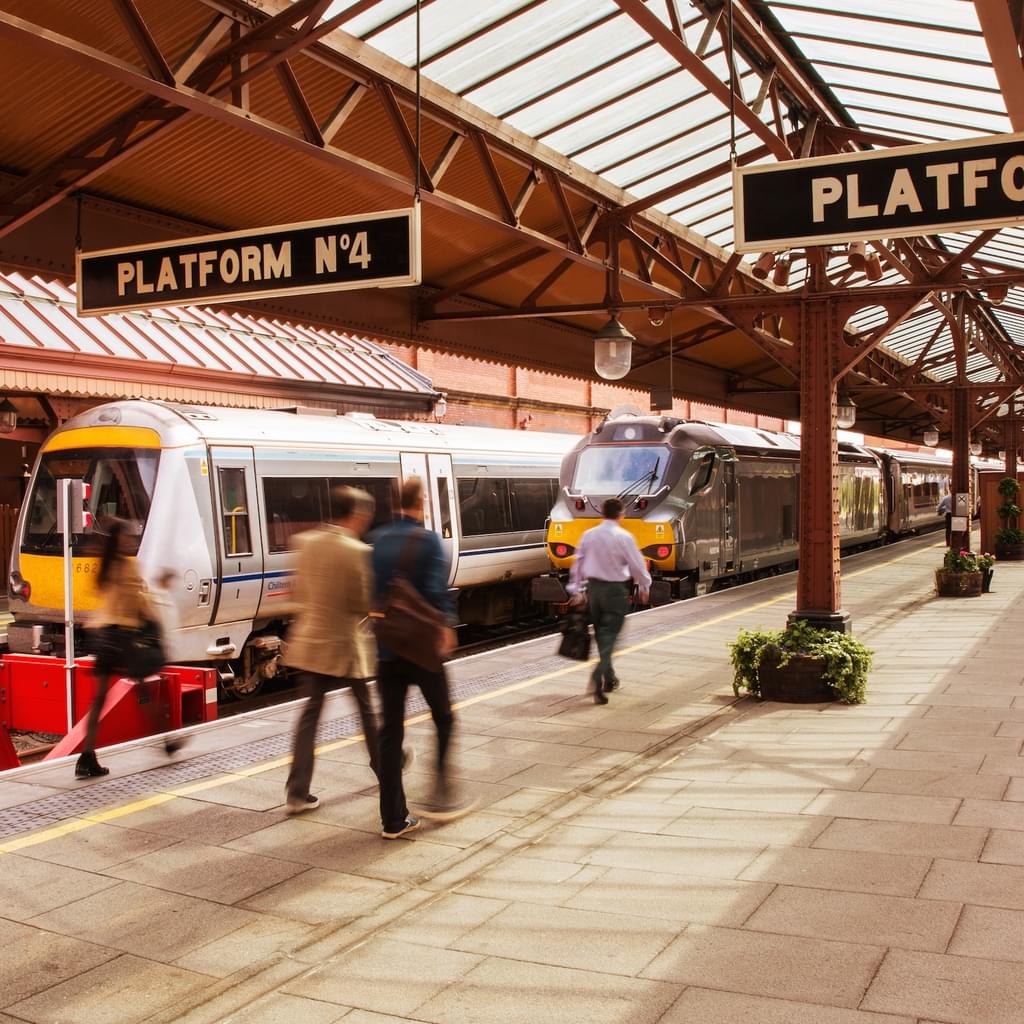
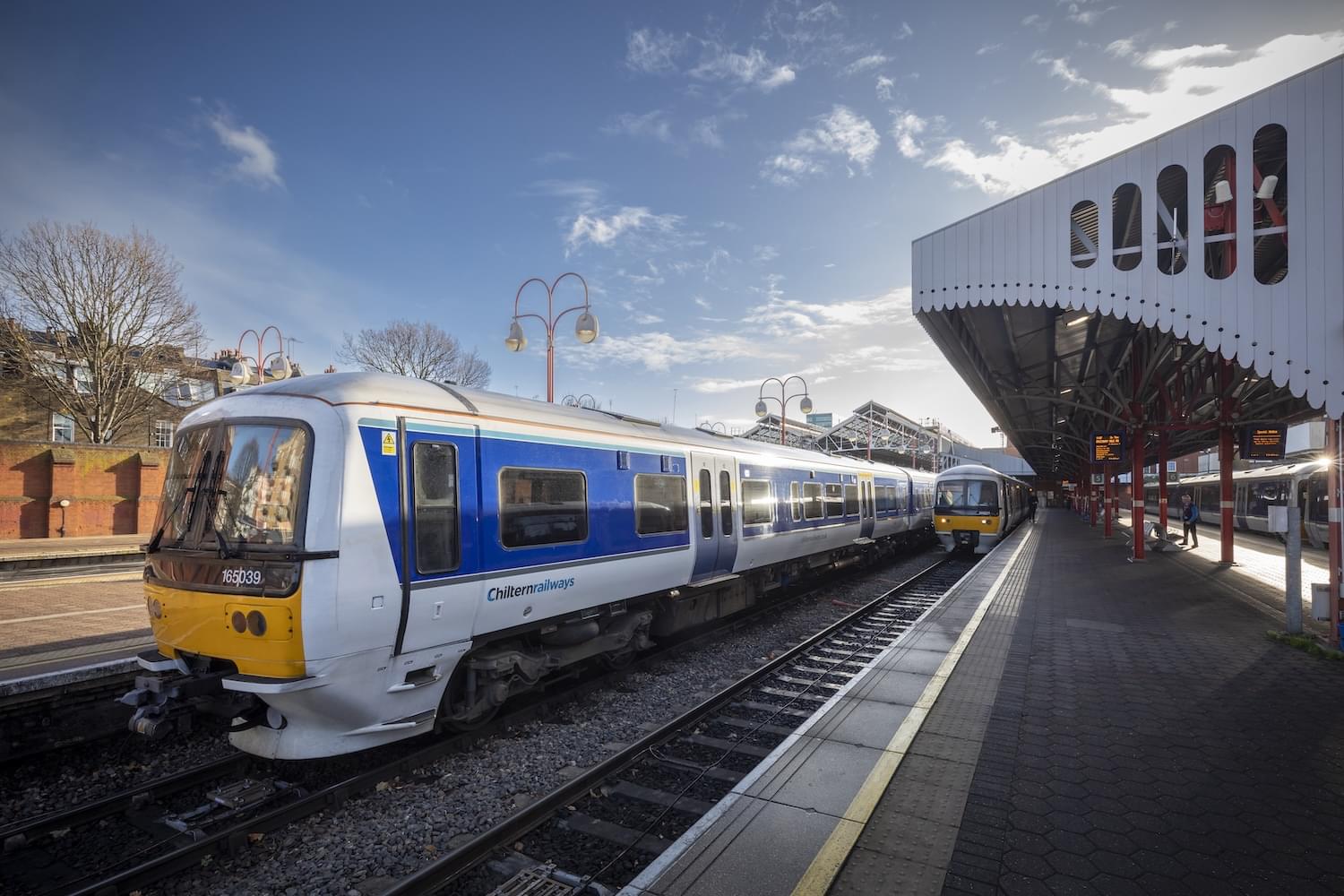
Chiltern Railways has been moving people in and out of London for nearly three decades, connecting the capital to some of England’s most vibrant cities like Oxford, Birmingham, or Stratford-upon-Avon. As a seven-day-a-week operator, Chiltern Railways serves a diverse passenger base: weekday commuters heading into London for work, weekend leisure travellers, and tourists visiting the country’s hidden gems.
Behind every journey is a commitment to customer service that extends well beyond the platform. Chiltern Railways’ contact centre team, made up of 10 agents, handles customer communications across multiple channels from 6am to 10pm every day of the year. At the “wheel”, supporting them, is Contact Centre Manager Marc Costello.
“Our two most popular channels are web forms and X. We get our ebbs and flows based on what’s happening on the ground. If we’re in major disruption – broken down trains, signal failures – then we get high volumes of contacts, and then they drop off once things are running normally again”, Costello explains.
This unpredictable demand pattern requires a flexible, responsive support infrastructure – one that can scale quickly while maintaining the quality and compliance standards demanded by the rail industry’s regulator.
The journey leading to AI-centric support
Chiltern Railways appointed Appamondo to establish a robust customer service infrastructure capable of meeting the regulatory requirements imposed by the ORR. When the partnership began, resolution times often reached or exceeded the ORR’s allowance. The initial Zendesk implementation delivered immediate impact, reducing average resolution times from around 13 days to 6 days, a 54% improvement that transformed operational efficiency.
Appamondo built a unique set of operating tools for Rail to fulfil and comply with ORR reporting requirements. “We have quite strict requirements with our regulator, and Appamondo provided specific, niche reporting within the platform. It just made our life a lot easier”, Costello assures.
Over the years, that same team built over 200 knowledge base articles covering everything from ticket refund policies to service disruption procedures. These articles gave customers the ability to find answers independently, which was essential for a small team managing unpredictable demand spikes during service disruption.
The unified platform also delivered significant improvements in multi-channel responsiveness. By bringing all customer communication channels together, the team gained unique visibility into the customer journey, enabling agents to see the complete history of customer interactions. The results are evident: first replies now average just 1 minute for messaging, 2 minutes for Facebook, and 5 minutes for X, ensuring passengers get rapid acknowledgment precisely when they need it.
Under Appamondo’s Continuous Improvement Programme, Chiltern has built a solid foundation of content and data from which to successfully introduce Copilot and QA. “For Zendesk Copilot and QA to succeed, it’s imperative that you have clean, well-defined knowledge, consistent ticket structure and policies, a clear QA scoring rubric, and strong feedback loops so we can trust and continuously improve AI”, says Appamondo co-founder Rick Hutchinson.
Agent empowerment with Zendesk Copilot
By implementing Copilot, Chiltern Railways and Appamondo have been able to give agents intelligent assistance that speeds response times and ensures consistency across the team. With Appamondo leading the implementation, Copilot was configured to leverage Chiltern Railways’ extensive knowledge base – both external articles and internal documentation.
“I wanted to give the agents tools that helped them. With onboarding new agents into the team, making sure that they were coming in with the same knowledge as the existing members, this obviously speeds up the process”, Costello explains.
As part of the Copilot mission, Chiltern Railways’ existing FAQs were converted into properly structured knowledge base articles, creating the foundation for AI-powered assistance. A particularly valuable addition was the internal knowledge base capability. Previously, the team relied on what the Contact Centre Manager calls the “Customer Relations Bible”: hundreds of documents scattered across Microsoft Teams folders containing how-to guides, contact processes, and internal procedures.
Copilot’s internal knowledge base consolidated this information, allowing agents to find what they need by typing keywords rather than hunting through folders. “Someone new coming in might not know where to go searching under 200 different documents, but a few keywords will put it right at their fingertips”, Costello highlights.

Transformative Quality Assurance (QA)
Alongside Copilot, Chiltern Railways implemented Zendesk’s QA solution to maintain quality standards and gain deeper insights into customer interactions. Previously, all of that was done manually. The automated approach allows the team to track metrics like empathy in customer interactions – something Costello admits is “quite difficult to measure” but crucial for maintaining service standards.
In fact, the impact of this implementation has been substantial. Between August 2025 and January 2026, quality scores improved across all metrics:
- Greeting quality rose 4.2% (from 93.21% to 97.24%).
- Readability increased 3.9% (from 94.84% to 98.68%).
- Tone improved 1% (from 97.08% to 98.04%).
- Grammar accuracy climbed 0.8% (from 98.56% to 99.38%).
More significantly, automated QA processes now operate 40 times more efficiently than manual reviews. Plus, the overall Internal Quality Score (IQS) has risen 6.3% in that same period of five months, demonstrating that AI-powered quality management delivers both efficiency gains and genuine service improvements.
The combination of Copilot and QA creates a powerful feedback loop: QA identifies areas where agent responses could be improved, while Copilot provides the tools to deliver those improvements consistently across the team. For Costello, this marked a shift from the years when Chiltern Railways had “stayed quite stagnant” with their Zendesk usage. “We got used to what we had, we were happy with it, and we just coasted along for a little while”, he admits. The introduction of these AI-powered tools reinvigorated the team’s approach to customer service.
AI and the Continuous Improvement journey
With the assistance of Zendesk Premier Partner Appamondo, Chiltern Railways has strengthened service quality and agent productivity through the introduction of Zendesk Copilot and enhanced QA practices. Full resolution times have decreased by 66%, complaint CSAT scores have increased by 21%, whilst agents access trusted knowledge instantly, reuse proven approaches through similar ticket insights, and craft clearer, more empathetic responses.
Alongside these improvements, Zendesk has delivered major operational benefits including compliant ORR regulatory reporting, faster multi-channel response times, and greater resilience during disruption through automation and self-service. The impact on ticket volumes has also been notable: compared to 2024, Chiltern Railways saw a 7.8% decrease in overall ticket volumes in 2025, with one-touch tickets specifically dropping by 8.6%. This demonstrates that self-service and automation are successfully deflecting routine enquiries, freeing agents to focus on complex cases requiring personal attention and empathy.
Looking ahead, Chiltern plans to build on this progress with telephony integration, further automation, and expanded language support to create a fully unified omnichannel contact centre.