
“Our goal is for interacting with SPC to be easy, accessible and useful, no matter which channel customers use. We want them to feel that their time is valued, that we understand them and that we’re here to help.”
Marta Santano
After-Sales Service Director at SPC
European presence
Headquarters in Spain with offices in Portugal and France
Sector
Technology and consumer electronics
References
1,500+
Developing technological solutions
30+ years
98%
CSAT on WhatsApp and calls in 2025
86%
of tickets resolved on first contact
7.1%
of tickets reopened
23.7 h
average first-contact resolution time
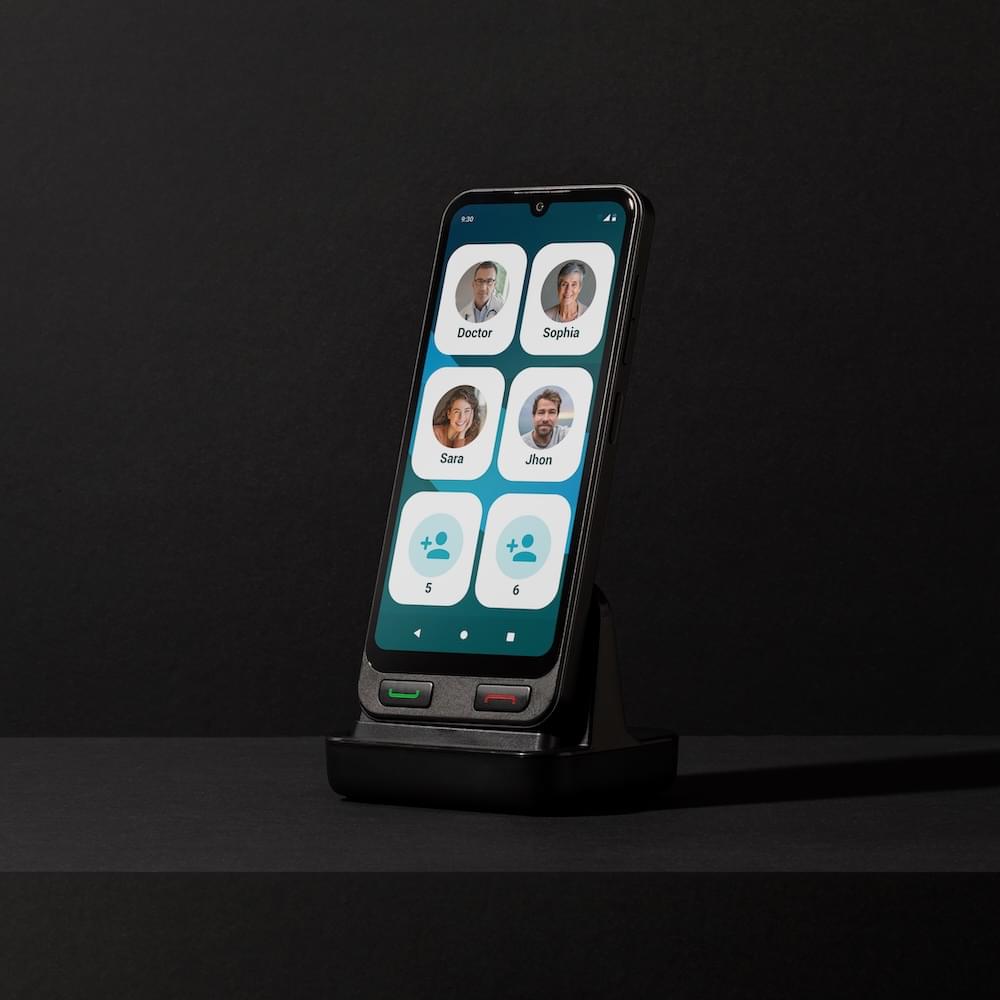
SPC is a Spanish brand that designs and markets consumer electronics, with a focus on smart products. It’s accessible technology, designed to make people’s lives easier. Customer service plays an essential role in their mission, as a key channel for active listening, and its impact is felt across the whole company.
By listening to feedback, SPC is able to develop new launches that are more closely aligned with the real needs of its customers. “Customer support is not just operational, but strategic, because it helps us understand our customers, anticipate their needs and improve both the experience we offer and our value proposition,” says Marta Santano, After-Sales Service Director at SPC.

Joint development
To achieve these goals, the company has worked with Zendesk as its technology partner since 2013. This collaboration has evolved alongside the Spanish market itself, gradually overcoming initial limitations of earlier years.
“It wasn’t easy at first, because the local support network was very small and there wasn’t yet a strong community around the tool. But little by little Zendesk evolved, and we evolved alongside it – growing together and adapting each new feature to our needs,” says Santano.
Over the past few years, the close collaboration of Zendesk’s sales and support teams has become one of the qualities SPC values most, along with the commitment shown by the Zendesk team.
What was the starting point?
Following a market analysis, SPC decided to roll out Zendesk’s technology with the aim of eliminating inefficiencies in existing processes. Before adopting Zendesk, customer support management was very basic. Outlook was used for emails, alongside a tool for calls that provided very little information and didn’t allow integration with other channels. “We also collected data using an internal tool which, over time, became quite outdated and limited when it came to analysing or scaling the service,” recalls Marta Santano.
The company highlights that the turning point in choosing Zendesk was realising they were losing highly valuable insights, both for improving the customer experience and for other areas of the business, such as marketing or product teams.
“We didn’t have real traceability of interactions, which meant we couldn’t identify patterns, detect opportunities for improvement or even measure customer satisfaction accurately,” SPC explains.
In addition, the channels available at the time were very basic, meaning customers had no visibility or way of tracking their own enquiries – factors that directly affected their perception of the service. Faced with this situation, the company’s leadership recognised the need for a professional, scalable tool capable of integrating all channels into a single platform. Zendesk provided exactly those capabilities.

Discovering the potential of scalable technology
SPC initially implemented Support as the foundation of its B2C customer service operations, together with Voice for call management.
The rollout began with the B2C Customer Service department, as this was the most complex environment in terms of volume, product variety, channels and languages. The team provides support in Spanish, English, Portuguese and French, with some coverage in Italian and German.
Once that structure was firmly established, implementing Zendesk Support for B2B affairs and internal IT support proved far more straightforward. By then, the company already had a solid foundation and experience working within the Zendesk ecosystem.
“We also aim to provide agents with the information they need directly within their workflow, so they can respond faster and focus more on personalisation rather than searching for information.” Marta Santano, After-Sales Service Director at SPCToday, SPC also usesGuide to maintain its knowledge base, Explore for data analysis across departments, Copilot to improve agent efficiency in customer support and Quality Assurance to monitor and enhance service quality.
The company is also currently evaluating the implementation of the Zendesk Advanced AI capabilities, exploring the many ways these tools could further improve both the customer experience and the efficiency of its support teams.
Let’s take a closer look at some of these tools.
Copilot. The main challenge that led SPC to adopt Copilot was a desire to unify the style and quality of responses across all agents, regardless of their experience or specific knowledge of each product. “We wanted customers to receive responses that were consistent, clear and aligned with our tone of voice. At the same time, we wanted to reduce our agents’ reliance on searches in external knowledge bases or other tools. Our goal is for agents to have the information they need directly within their workflow, allowing them to respond more quickly and focus more on personalisation than on searching for information,” Marta Santano explains.
According to Santano, this has significantly improved the consistency and overall quality of customer responses – an impact that has been reflected in higher team productivity, faster service and an improved customer experience.
One feature that has particularly surprised agents – because of how much it improves their daily work – is Copilot’s ability to automatically transcribe calls and generate ticket summaries.
This feature is especially useful if a customer has previously been assisted by another agent, as it gives the next agent a quick overview of the situation without them having to manually review the entire conversation. This not only saves time, but also improves continuity in support and reduces the margin for error, offering a much smoother and more consistent experience for the customer.

Explore. Explore has also proven extremely valuable thanks to the real-time metrics it provides. However, the sheer volume of data available has also made it one of the most challenging tools to explore fully.
“At first, we found it quite complex and not particularly intuitive, which meant we weren’t making the most of the data available. Over time, we’ve seen Zendesk simplify the experience, making it increasingly accessible for non-technical users. And now, with the recent announcements around Advanced AI – such as the ability to generate automatic reports simply by describing what you need – we believe it will represent a major step forward in terms of agility and autonomy for the team,” says Marta Santano.
Having gained a deeper understanding of how to use Zendesk, SPC has been able to tackle broader business challenges, such as connecting customer service with product development teams.
“We create views and reports that summarise tickets by product, enabling these teams to quickly identify recurring queries, user difficulties or features that generate the most questions. Thanks to this analysis, we can detect whether a product is causing friction, needs improvements or requires strengthened documentation in the knowledge base. In short, Explore has enabled us to turn customer feedback into concrete improvements, both for products and for support,” highlights Santano.
Guide. SPC has been steadily building its knowledge base in Guide to optimise the information users are seeking. This has helped reduce the average number of tickets handled by agents. From around 5,000 tickets in 2023, the number fell to 3,700 by 2025.
Zendesk QA. This is a recently implemented feature and the company is still exploring its full potential. It’ll certainly prove invaluable in helping SPC meet the requirements of the UNE-EN ISO 9001:2015 standard more easily, under which its quality management system is certified.
At present, it’s primarily used for basic statistics and self-assessments. “We are confident that, once we have trained more extensively, it’ll become a key tool for analysing service quality with more structure, including aspects such as tone, spelling, agent knowledge and other qualitative elements that were previously difficult to evaluate systematically and visibly,” says Marta Santano.

Personalising technology integrations
Aside from leveraging Zendesk’s own technology, the platform also enables integration with other tools via APIs or Apps. For SPC, these integrations are handled by Helping, a Zendesk partner, which also configures the more technically-complex Zendesk tools.
This type of integration has helped centralise information, reduce management times and improve the customer experience. One example of this is the integration with Shopify (the company’s e-commerce solution) and SAGE X3 (its ERP and the CRM system used for technical service).
The Shopify integration allows customer order data (order number, status, details, etc.) to be displayed instantly. This connection enables automation, streamlining the management of tickets related to shipments, returns or incidents.
Meanwhile, the SAGE X3 integration allows Zendesk to generate collection orders and RMAs (Return Merchandise Authorisations) for repairs directly, without needing to access other platforms. The systems also communicate with each other, so Zendesk automatically updates the status of RMAs in real time and proactively informs customers via automation, without manual intervention from a technician.
“Both Helping and the external platform developers (SAGE X3) found the process straightforward, as Zendesk provides very clear, accessible instructions on integrations, API configuration and necessary calls. This technical accessibility made collaboration much easier and enabled efficient implementation,” Santano notes.

Future challenges
It’s clear that Zendesk technology is helping SPC address current challenges, in line with the company’s philosophy of making customer experience a differentiating factor.
The strong rapport between the teams of both companies and the rapid advancement of Zendesk technology, particularly with AI as a driving force, opens up a world of possibilities.
For now, SPC is focused on organising usage of the recently-installed Zendesk QA to fully realise its potential.
At the same time, the company is exploring opportunities offered by Zendesk Advanced AI. Its implementation could deliver a major leap in efficiency, analytics and personalised service – undoubtedly, a significant step towards designing a truly hyper-personalised CX.